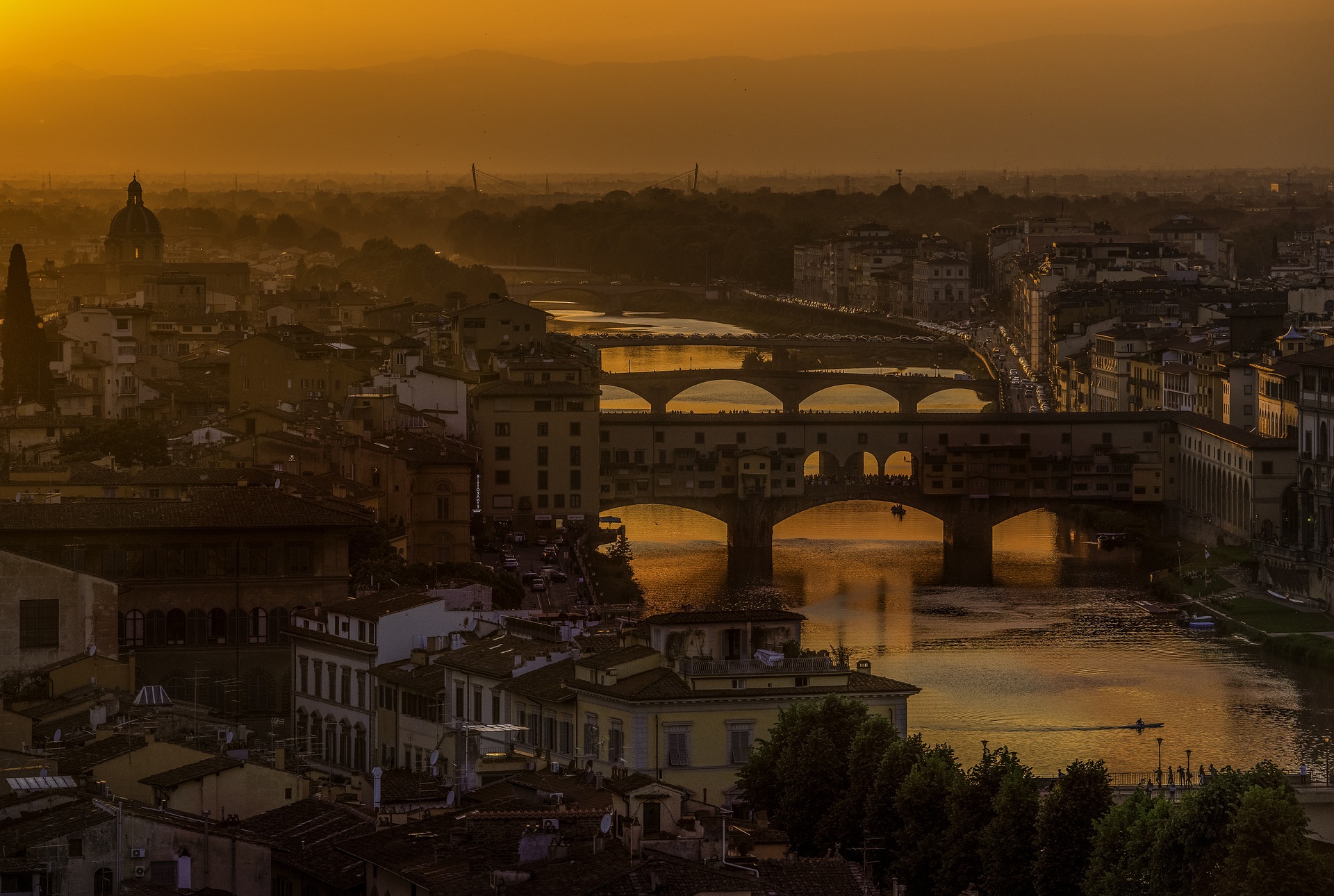
Author: JuanCarlosPS

  • Why was Florence so important during the Renaissance?

    Why was Florence so important during the Renaissance?

    The Renaissance

    The Renaissance (14th-17th century) is an era that brought the Middle Ages (5th-14th century) to an end. The simplest form to explain what the Middle Ages and the Renaissance are is to say the Middle Ages was a dark age, where there was not much development in any areas. On the contrary, it seems that the old knowledge and wisdom of older times were lost, or worse, persecuted. 

    The Renaissance, as the name said, is the re-birth of old knowledge and wisdom. But what was the real cause for the start of the Renaissance that ended almost 1000 years of the Middle age? The fall of the Byzantine Empire could have impulsed the Renaissance since the Byzantine Empire had saved classical knowledge during the Middle Ages. After the Ottoman Turks conquered Constantinople, many intellectuals and artists from the Byzantine Empire escaped to Europe. These intellectuals and artists reached places with political and economic stability. Florence was one of the cities with the best conditions for these talents to share their knowledge. 

    How could the Renaissance produce so many great artists?

    We have heard for sure the name of many great artists from the Renaissance. Here are some of them: Leonardo da Vince, Michelangelo, Sandro Botticelli, Filippo Brunelleschi, Donatello, Lorenzo Ghiberti, Fra Angelico, Fra Filippo Lippi, Masaccio, Paolo Uccello. Besides the fact that they are artists from the Renaissance, they all either were from Florence or lived a long time in Florence. This is quite incredible fact since these artists are worldwide famous and recognized as very talented. 

    There are many reasons why Florence was the home of many famous artists. The byzantine intellectuals and artists that escaped from the Ottoman Turks went partly to Italy and stayed there. Italy was experiencing a flourishing economy, and Florence was one of the major centers. Moreover, their rich families there supported the artists and commissioned works from them. One of the famous families that were responsible for the support of the artists was the Medici family. Another reason seems to be the humanist tradition in Florence, which valued knowledge in different areas.

    After considering many facts, e.g. the Crusades, the fall of Constantinople, and the formation of big cities in Italy, the main reason seems to be the flourishing of the economy caused by trading goods. To trade goods you need a civilized system where trust is important. Accumulation of richness would lead to the growth of the middle class and the upper class. Once a civilization starts to accumulate wealth, it is known that it starts to become more interested in others topics like arts, science, and exploration. These changes would lead mostly to great developments in the culture of this civilization.  

    The main reasons

    Therefore, the main reasons why Florence was so important during the Renaissance and had such a great influence, and was home to many great artists, are:

    • Economic and political stability in Italy. Italy was flourishing, and trading was a common activity. There was not only an exchange of goods but of knowledge and culture.
    • Rich families supported the artists. One of the most powerful and rich families during the Renaissance was the Medici family. The Medicis were known to support great artists in Florence and other cities.
    • The knowledge of the Byzantine Empire could be, at least partially, saved in Europe. Intellectuals from this empire flew to Europe after the Ottoman Turks conquered Constantinople. They could have a living there and teach what they knew.

    Sources:

    • Book “The Renaissance: A Short History” by Paul Johnson
    • Book “The Civilization of the Renaissance in Italy” by Jaco Burckhardt
    • Picture from Pixabay (www.pixabay.com)

    Juan Carlos Peñafiel Suárez

  • Storytelling and its influence in the past and today

    Storytelling and its influence in the past and today

    Storytelling is one of the oldest and most powerful ways of communication in humans. And the reasons for it are quite simple: traditional storytelling combines different elements that stimulate many senses: sight through the body language of the storyteller, hearing through sounds including not only words, and touch through body contact in case the storyteller wanted to use this strategy. Also, the feeling of hearing a story in a group is similar to watching a soccer game with friends or watching a movie. The group experience enhanced the power of the story. 

    Different types of storytelling

    Today we have many different types of storytelling. There is written storytelling, which is today also one of the most powerful tools next to visual storytelling. There is no doubt that these ways of communication shape our world today. However, today traditional storytelling – that is oral storytelling – remains the most powerful way of communication. The reasons were mentioned already before. The more senses are stimulated, the more powerful the message. Another reason for it is that human emotions can be felt. For this reason, a person who dominates oral storytelling can influence people much easier than a person that dominates only the written storytelling form. There are endless examples of it only by looking at the most famous leaders of our history.

    Another reason why oral storytelling is still the most powerful way of communication is that the written word needs to be read, and imagined by the reader. The more complex a writing is the more imagination and knowledge the reader has to possess. Oral storytelling balances this disadvantage by adding other elements. For this reason, oral storytelling has a higher impact. However, since education nowadays has reached very high levels, humans have excellent reading skills. And if the writer possesses the ability to explain complex terms in easy ways, the message will have also a very high impact.

    Importance of storytelling today  

    But what is the role of storytelling today? Is it more important than ever before? Or is its importance decreasing continuously? Humanity is already in the era of artificial intelligence. That means that access to knowledge is much easier than before. In some way, every piece of information is telling a story. But the mind can’t handle so many stories at the same time. Therefore there are some human abilities that will become much more important than ever before:

    1. Concentration: The amount of information available is impossible to manage for the human mind. The ability to concentrate on certain tasks will become more important. 
    2. Creativity: A problem that will arise with the high amount of information is that in some cases creativity is not been stimulated because the information is already delivered. The mind becomes more of a consumer than a producer.
    3. Connecting dots: Here concentration and imagination will help to develop the ability to connect dots. Topics that seem unrelated will become similar thanks to the imagination. 
    4. Filtering of information: This ability is very similar to concentration. The ability to discard information very fast will be necessary before deciding to concentrate on other pieces of information. 
    5. Storytelling: Because humans are literally flooded with information, any kind of storytelling needs a high impact to attract the attention of the audience.

    Artificial Intelligence and storytelling

    Artificial intelligence is already capable to write stories. However, the most important element of a story for a human is still the human element – that is, the sharing of emotions. It could be that one day AI will be able to grasp the actual emotions of humanity or groups of humans in a specific place. But this will take still some time. And exactly this is the ability that will differentiate AI-generated text from text written by a human. I guess that scientific papers will be written very soon by AI since the only necessary information that the AI needs to write a paper are the results and the structure of the paper. On the other side, real stories –the ones that use emotions- are more difficult to be generated by an AI. Only humans can grasp emotions, and communicate with other humans accordingly to these emotions.

    Therefore, being a storyteller today is much easier than ever before. But to be a good storyteller will become more difficult, but more necessary than ever before.