One wave of technological advancement is driving the development of others. AI tools are enabling the processing of data in innovative ways. The business potential of AI is also pushing companies to develop more powerful hardware, such as microchips, to run AI tools more effectively. Another significant wave on the horizon is robotics. At some point—likely sooner rather than later—the advancements in robotics and AI will converge, creating a reality that, until now, has existed only in science fiction. For now, let’s focus on the next steps.
Samsung has recently acquired a significant stake in Rainbow Robotics, with both companies based in South Korea. This acquisition signals Samsung’s commitment to diversifying its business and leveraging automation and robotics for future growth. It doesn’t take a genius to foresee that robotics will soon have a massive impact. However, it does require boldness and strategic foresight to invest at the right time in the right technology. This move by Samsung may prove to be exactly that—a stroke of genius.
While technology has advanced enough to ignite a robotics revolution, other factors remain critical. One of the key factors is cost. Once robotics products become affordable for individuals with average incomes, the revolution will truly begin. For example, if a useful robot were to cost around €1,400—the price of an iPhone 16 Pro—it is almost certain that the revolution would already be underway. Currently, most robots are priced above €10,000, which makes them accessible primarily to companies rather than individual consumers.
Rainbow Robotics: Pioneers in Robotic Innovation
Founded in 2011 and headquartered in Daejeon, South Korea, Rainbow Robotics has established itself as a leading developer of robotics solutions. The company is widely recognized for its expertise in humanoid robots, collaborative robots (cobots), and robotic platforms for various industrial applications. Rainbow Robotics originated as a spin-off from KAIST (Korea Advanced Institute of Science and Technology), where the team gained fame for developing the humanoid robot DRC-HUBO, a competitor in the DARPA Robotics Challenge. With a strong foundation in research and innovation, Rainbow Robotics has continuously delivered state-of-the-art products that address the needs of diverse industries, including manufacturing, healthcare, and education.
Reasons Behind Samsung’s Acquisition
Samsung’s decision to invest in Rainbow Robotics is driven by several strategic considerations:
Expanding Robotics Expertise: With Rainbow Robotics’ proven track record in humanoid and collaborative robots, Samsung can leverage this expertise to enhance its robotics division and accelerate the development of next-generation robotic technologies.
Market Diversification: As Samsung seeks to reduce its dependence on its traditional businesses like semiconductors and smartphones, robotics presents a promising avenue for diversification and future revenue streams.
Strategic Alignment: The robotics market is poised for substantial growth, fueled by advancements in AI, IoT, and automation. By acquiring a stake in Rainbow Robotics, Samsung positions itself as a key player in this burgeoning sector.
Technological Synergy: Samsung’s expertise in AI, semiconductors, and hardware can complement Rainbow Robotics’ robotics platforms, enabling the creation of highly integrated and efficient robotic systems.
Global Competitiveness: The acquisition aligns with Samsung’s goal to compete globally with leading robotics companies like Boston Dynamics and SoftBank Robotics, solidifying its presence in the robotics ecosystem.
Products of Rainbow Robotics
Rainbow Robotics offers a diverse range of products that cater to various sectors. Some of its notable products include:
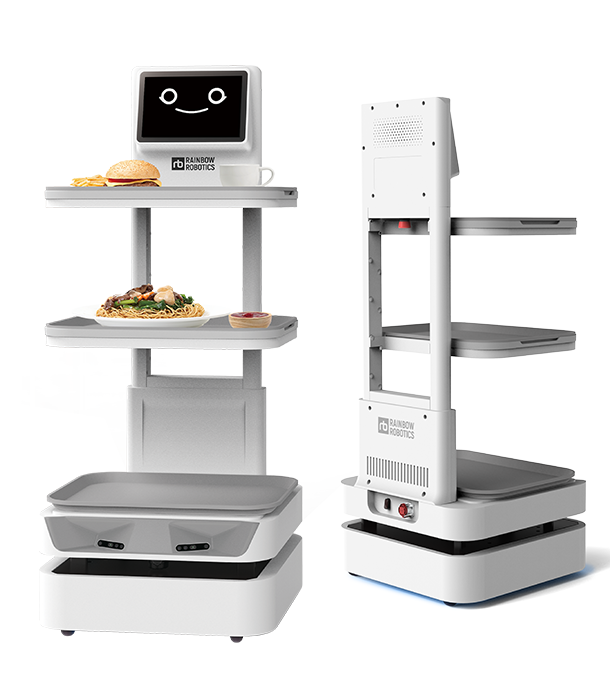
Serving Robots: Advanced robotic systems designed to assist in hospitality, healthcare, and service industries by performing tasks such as delivering food, beverages, or medical supplies, enhancing efficiency and customer experience. Probably this is the product that will have the major acceptance in households and other common places.
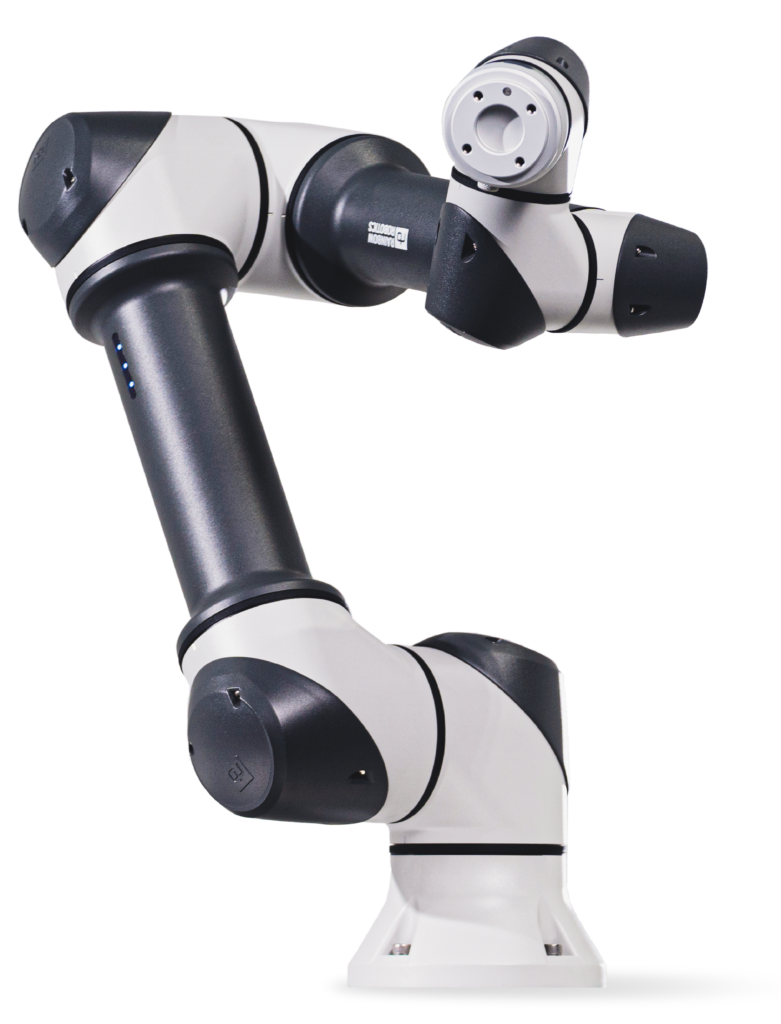
RB Series Cobots: Collaborative robots designed for industrial applications, offering high precision and safety for tasks like assembly, packaging, and inspection.
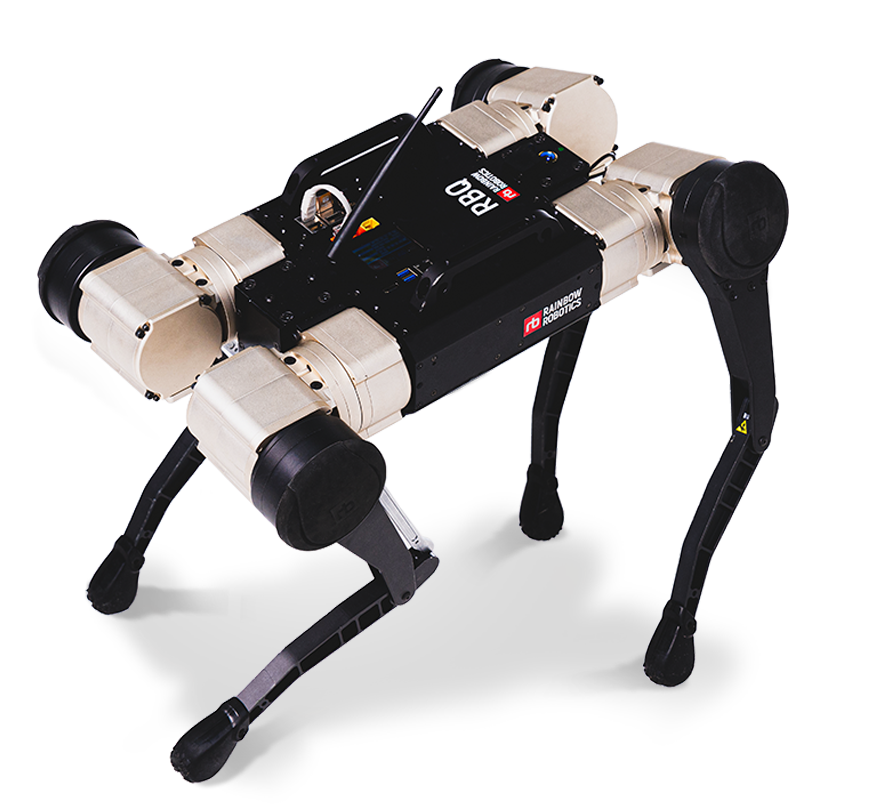
Quadruped Robots: Four-legged robots suitable for research, disaster response, and surveillance applications.
Robot Arm Platforms: Customizable robotic arms for automation in manufacturing, logistics, and other industries.
Autonomous Mobile Robots (AMRs): Robots designed for autonomous navigation and transportation tasks in warehouses and factories.
Educational Robots: Platforms for robotics education and research, aimed at fostering innovation and learning in academic institutions.
Conclusion
The run to place the best and most affordable robots in the market has started. Samsung’s acquisition of a stake in Rainbow Robotics is a very clear signal of it, as well as an investment in the future and potential of robotics.
In an ideal world, jobs would be created to align with employees’ dreams and make the most of their unique skills. However, today’s reality is quite different: employees and candidates are often required to adapt to the needs of companies. These companies are largely driven by efficiency, which, in essence, equates to financial goals. This focus on efficiency often translates to reducing research and production costs while increasing revenue—a straightforward approach to boosting a company’s profitability. One traditional way to increase efficiency was to have the best employees, e.g. through acquisitions or staff training. But this is changing today.
Two other compelling candidates for achieving the vision of high efficiency and profitability within a company—thanks to their immense potential—are Automation and Artificial Intelligence. Automation enables the reduction of manual tasks by utilizing robots, while Artificial Intelligence allows for the automation of complex processes and decision-making by simulating human reasoning. Both technologies are poised to significantly increase efficiency within companies. As a consequence, fewer workers will be needed overall in the future, although demand for a smaller number of highly skilled workers will increase.
Is investment in staff training a worthwhile decision for companies?
The period between now and the future, when Automation and AI become widespread, is a critical time during which highly skilled workers who understand these technologies will be in high demand. Once this future point is reached, fewer workers will be needed. In theory, investing in staff training might seem unnecessary because companies should focus on hiring the most talented and intelligent individuals available today. However, this strategy would only work for companies with a bold vision and, more importantly, substantial financial resources to invest in recruiting top talent—a challenge for most organizations. This approach was, for example, employed by Apple from its early days and continues to be a strategy used by Tesla today.
However, since this strategy can only be implemented by companies with high liquidity and innovation-driven goals, these companies will attract the majority of top talent in the market. This will put pressure on other companies, as the performance gap between the two groups will widen. As a result, investing in staff training will become almost mandatory. The time will come when automation and AI will be ubiquitous across most companies, but due to performance competition, only the best and most innovative will thrive.
During the transition to highly automated and AI-enhanced processes, some companies will move quickly, like leopards, while others will lag behind. It’s possible that, in the future, employees—who have been heavily invested in through training and development—may no longer be needed, but the timing of that shift remains uncertain. In the meantime, companies must address the challenge of acquiring top talent—either by recruiting the best from the market or by investing in the development of their existing staff.
There is no doubt that everybody in today’s world has heard this word in English or another tongue: efficiency (Spanish: eficiencia, German: Effizienz, French: efficacité). And it is not a surprise that this word is overused because in some way it is used as an incredible characteristic of a person or a company. To better understand this tendency nowadays, it is important to analyze the word and its meaning.
The question “What does this mean?” may sound very simple, but often the most simple questions are the most difficult to answer because we are used to thinking in a complex way so much that we forget to think simply. However, to think in a simple and complex way and to switch between these and all the different ways in between is important to be adaptable in life. There are for sure complex things in life, where we need complex thoughts and complex solving skills. There are also simple things in life, and here we need simple thoughts and simple problem-solving skills. A bad application of this will bring no solution, and in the end, talking in modern terms, to a loose of money and time, which is one of the things companies fear the most.
Efficiency
Let’s start with efficiency. This word comes from the Latin term “efficientia”. It means “the power to accomplish, produce, or cause an effect.” The words ‘effect’ and ‘efficiency’ appeared in the late 16th century, meaning ‘the fact of being an efficient cause’ (Oxford Dictionary). I could stop here with the definition, but that would be an uncompleted work. To understand today’s meaning of efficiency means to apply the word, or be mathematical, being able to calculate or describe the efficiency of somebody or something. And here it’s easy to see that there are no absolute values. Only a comparison makes sense to describe if something or somebody is efficient. A company, worker, or process is efficient only if it is possible to say that they are more efficient than before.
Examples: The car and the salesman
And not better to make this point clearer than with an example. If somebody says “A Tesla car is very efficient today.”, what should we understand from it? At least it is more efficient than before. But how much, what is the exact meaning of it? That can be only a very simple marketing strategy, as the increase in efficiency is only 1% compared to before. The word ‘efficiency” can mean thousands of things. Another example: if we hear of a very efficient salesman, what should we think of it? That he can do 100 calls per day? Or that he can close one contract every day? At least we would probably understand that this salesman is one of the best in the market, whatever the word ‘efficient’ means here. However, since efficiency is only describing that something or somebody is doing something in a better way or with fewer resources than before, it doesn’t necessarily mean that this is what we are exactly searching for.
Efficiency must be clearly defined
A company is searching maybe for a salesman who closes contracts because that is what brings the money. For this company, an efficient salesman is somebody who can make as many closes as possible, and therefore above the average. This would be an efficient salesman. Making 100 calls per day could be an indicator that this salesman could make closes above the average, but this must not be necessarily true. If I want to buy an efficient car, I have to define what efficiency is. Let’s say I care about how much money I would spend charging the car, then for me, efficiency is related to the cost of kWh. But if I don’t care so much about money but more about time, that means, I want to charge my car as few times as possible, then the efficiency is related to the travel distance per charge.
What does efficiency mean for the business world?
Here there are also many different definitions. Are we talking about a process or an employee? Both cases are complex. Therefore, since everybody understands the work of an employee, is much easier to understand the business world starting with this. Most businesses are concentrated basically on two things: – it doesn’t mean these are the correct things to concentrate on, but this is the reality today- reducing costs and increasing earnings.
If the company knows that an employee is efficient, means basically that he is doing the same amount of work for less money, or more work for the same money. There are other variants where an employee can become more efficient, without communicating this directly to the employer, meaning that he is doing his work in less time getting the same amount of money. Not a loss for the company but a win for the employee. But this is another topic. Here one more time, independent of which parameters are taken (money, amount of work done, work hours, etc.), the parameters have to be chosen, then a comparison between employees is necessary to be able to talk about efficiency.
Efficiency Beyond the Business Context
In any context, it is important to define the parameters. In the business context, they are often called KPIs (Key Performance Indicators). Whatever fancy names are used to describe something, it must be very clear what it is important. Then, according to the chosen parameters, it is possible to measure efficiency. Applied in life, if somebody has a dream to visit all the countries of the world, because this is his/her life dream, then no matter which position he/she has in the company, or the amount of money he/she accumulates, or how large the personal network is, this person consciously or subconsciously will track this parameter: Number of Countries visited. Now it is easy to understand how this person would feel if the person is maybe 60 years old and has only visited 3 countries. It is also now very easy to exchange this dream with any other possible dream. Similarly, efficiency is applied in every other context: business, life, economics, personal development, sports, etc.
Efficiency is a tricky word that has to be analyzed. There are many different ways to track efficiency, and each way would lead to a different way of working. As it happens with the great companies when they were founded, their parameters were not small at all. They were not tracking insignificant things. They were tracking visions so large that they had the freedom to work on all other infinite parameters, as long as they achieved the large dream. There are many examples, but one that seems to be a great example for it would be Starbucks (Founder: Howard Schultz). The vision was to transform Starbucks into a “third place” between home and work. The vision is so great because it already implies that one of the parameters they want to track is the number of Starbucks stores, maybe after this, the number of customers per Starbucks store. These parameters can change, but the vision remains the same. Maybe if Howard Schultz had started with a vision like “the most expensive coffee in the world”, this parameter (Price/Cup of Coffee) would have led to a disaster.
After World War II Japan achieved an increase in the quality of their products so fast and high that the Japanese products started to be sold worldwide and were much preferred than the USA products. This method is called Kaizen (改善) which means ‘change for better’. The first kanji 改 means change or revision, and the second kanji means virtue or goodness. The concept of Kaizen emphasizes small, incremental improvements in processes, products, or services, rather than large, radical changes. It is very curious to note that the best way to make improvements is to do it incrementally. Life makes small and incremental improvements, which is called evolution. Humans make large and radical changes when they are hit strongly by life, but the most successful people also make small, incremental improvements in their lives. And the same with companies. Inflexible companies react often late to technological advances and want to a large, and radical changes, e.g. by implementing new technology. This causes an incredible amount of problems in the company. Software development has adapted today the agile development, which has also the idea of small and incremental improvements.
Joseph M. Juran (1904 – 2008)
Considered as one of the “fathers” of modern quality management – although his famous book “Quality Control Handbook” is from 1951, already more than 70 years old – Joseph M. Duran was born in Romania, and immigrated to the United States. He became an electrical engineer at the University of Minnesota in 1924. A contribution from Juran was the development of the “Juran Trilogy”, which focuses on quality planning, quality control, and quality improvement. These three areas are essential processes for managing quality in organizations.
The contribution of Joseph M. Juran to Kaizen was crucial. He brought quality management concepts to Japan. His work was better adapted in Japan than in the United States, which lead to the explosion of so high-quality Japanese products.
The results of Kaizen in Japan after World War II
Joseph M. Juran visited Japan in 1954. He was invited by the Union of Japanese Scientists and Engineers (JUSE) to give lectures and seminars on quality management. His new ideas and concepts like “quality control”, the importance of training and education, the necessity of continuous improvement, and the importance of top management involvement were kind of revolutionary. in the late 1950s Japanese companies began implementing these quality management practices, and already in the 1970s Japanese products became synonymous with high quality worldwide.
Kaizen and quality control are related, although they are not the same. However, the work of Joseph M. Juran was the seed that would lead to the creation of Kaizen, or better said, Kaizen as a philosophy, which is in the end supported with statistical tools. The results of their application led to Japanese companies becoming international companies with a great name in the global market for their high-quality products:
Toyota – The Toyota Production System (TPS) is built on Kaizen principles.
Canon – applied Kaizen to improve its production processes and product quality.
Panasonic – applied Kaizen to streamline its operations and stay competitive in the global electronics market.
Honda – applied Kaizen to optimize its manufacturing and development processes.
Sony – applied Kaizen to enhance efficiency and product quality in its production facilities.
Nissan – applied Kaizen into its manufacturing processes, leading to significant improvements in efficiency, quality, and production speed.
Mitsubishi
Mazda
Hitachi
The Kaizen Philosophy
Several core principles guide the application of Kaizen in engineering and other disciplines. Nowadays Kaizen is also taught to be applied in personal life. That is the reason it can be considered almost a philosophy.
Continuous Improvement
Employee Involvement
Gemba (The Real Place)
Elimination of Waste (Muda)
Standardization
PDCA Cycle (Plan-Do-Check-Act)
Technical Implementation of Kaizen in Engineering
Different tools help identify opportunities for improvement and facilitate the continuous improvement process. Here is only a list of some tools:
Value Stream Mapping (VSM)
5S Methodology
Seiri (Sort)
Seiton (Set in Order)
Seiso (Shine)
Seiketsu (Standardize)
Shitsuke (Sustain)
Root Cause Analysis (RCA)
Kanban System
Poka-Yoke (Error Proofing)
Learning from the history of Kaizen
First learning: There is some interesting learning from the history of Kaizen. The ideas from Joseph M. Juran were there, but the Japanese companies were the ones that adopted these ideas before the United States. The United States of course recognized that they were losing the race, so American companies started to implement also the Kaizen principles later. These companies were Ford Motor Company and General Electric (GE). This learning teaches us that good ideas are everywhere. But not everybody or every company will be able to recognize it, and more difficult, to implement it.
Second learning: Another learning from the history of Kaizen is that Kaizen has proven that it is better to make small and incremental improvements than to the ‘dramatic changes’ because it is necessary. Dramatic changes cost time and money. Small and incremental improvements can be done almost on the fly without downtime. This demands of course a flexible structure that can adapt the small and incremental improvements at any time.
Steve Jobs on the Influence of Joseph M. Juran
Steve Jobs was a genius who could combine marketing and management skills, engineering, and art into great products. And maybe more importantly, he was able to lead a group of very intelligent people to work together. Another curiosity of Steve Jobs was that he knew many talented people of his time, and he was searching their company. Joseph M. Juran was not unknown to Steve Jobs. Moreover, there is a video on YouTube of almost 20 minutes, that is worthy of seeing for anybody interested in manufacturing, quality control, and how these concepts can lead companies to greatness.
Quotes
“Without standard there is no logical basis for making a decision or taking action.” Joseph M. Duran
“Quality planning consits of developing the product and processes required to meet customer’s need.” Jospeh M. Duran
“Where there is no Standard there can be no Kaizen.” Taichii Ohno
“If you define the problem correctly, you almost have the solution.” Steve Jobs
The life sciences industry, including pharmaceuticals, biotechnology, medical devices, and diagnostics, is marked by strict quality standards, intense regulatory oversight, and an ongoing drive for innovation. Within this demanding environment, the Six Sigma methodology has become a crucial tool for improving manufacturing processes, enhancing product quality, reducing variability, and achieving operational excellence. With its data-driven approach and focus on process improvement, Six Sigma is particularly well-suited to address the complex challenges faced by life sciences manufacturers.
Overview of Six Sigma Methodology
Six Sigma is a structured, data-centric methodology designed to eliminate defects and reduce process variability. Developed by Motorola in the 1980s and later popularized by companies like General Electric, Six Sigma aims to achieve a performance level where the number of defects is reduced to fewer than 3.4 per million opportunities, thus ensuring near-perfect quality.
The methodology follows the DMAIC framework, which stands for Define, Measure, Analyze, Improve, and Control:
Define: Identify the problem, project goals, and customer (internal or external) requirements.
Measure: Collect data and establish baselines to quantify the problem.
Analyze: Use statistical tools to identify the root causes of defects or process variations.
Improve: Develop and implement solutions to address the root causes and optimize processes.
Control: Monitor the improved process to ensure sustained performance and prevent regression.
In the life sciences sector, Six Sigma can be applied to various manufacturing processes, from drug formulation and bioprocessing to medical device assembly and quality control. Its emphasis on data and statistical analysis aligns well with the industry’s need for precision and compliance with regulatory standards.
Benefits of Six Sigma in Life Sciences Manufacturing
Enhanced Product Quality: Six Sigma’s focus on reducing process variability leads to more consistent product quality, critical in life sciences where even minor deviations can significantly impact patient safety and efficacy.
Regulatory Compliance: The life sciences industry is heavily regulated, with stringent requirements from agencies like the FDA, EMA, and ISO. Six Sigma helps ensure that manufacturing processes meet these standards through continuous improvement and thorough documentation.
Cost Reduction: By identifying inefficiencies and eliminating waste, Six Sigma can lead to significant cost savings in manufacturing, especially important given the high costs of development and production in life sciences.
Faster Time-to-Market: Efficient manufacturing processes reduce cycle times, enabling companies to bring new products to market more quickly—an essential advantage in an industry driven by innovation and rapid technological advancements.
Improved Risk Management: Six Sigma’s rigorous approach to problem-solving helps identify and mitigate risks in the manufacturing process, ensuring potential issues are addressed before they impact product quality or compliance.
Case Studies of Six Sigma in Life Sciences
1. Pharmaceutical Manufacturing: A major pharmaceutical company implemented Six Sigma to address variability in tablet weight during manufacturing. By using statistical process control (SPC) and root cause analysis, the company identified and eliminated sources of variation, resulting in more consistent products and significant waste reduction.
2. Biotech Process Optimization: A biotechnology firm applied Six Sigma to optimize its bioreactor process for producing monoclonal antibodies. The initiative focused on reducing variability in critical parameters such as pH and oxygen levels, resulting in higher antibody yields with improved quality, leading to lower production costs and better patient outcomes.
3. Medical Device Manufacturing: A medical device manufacturer used Six Sigma to improve the precision and reliability of its catheter assembly process. The project involved comprehensive analysis of the assembly line, identification of key factors affecting product quality, and implementation of process improvements, leading to a significant reduction in defect rates and enhanced product reliability.
Comparison of Six Sigma with Other Methodologies
While Six Sigma is a powerful tool for process improvement in life sciences manufacturing, it is not the only methodology available. It is often compared to other methodologies such as Lean, Total Quality Management (TQM), and Agile. Each of these methodologies has its strengths and weaknesses, and understanding how they compare to Six Sigma can help organizations choose the most appropriate approach for their needs.
Lean Methodology
Lean focuses on maximizing value by eliminating waste (non-value-added activities) from processes. Originating from Toyota’s production system, Lean aims to create more value with fewer resources by optimizing flow and efficiency.
Similarities with Six Sigma: Both methodologies seek to improve process efficiency and quality. In fact, many organizations combine Lean and Six Sigma into Lean Six Sigma, leveraging the strengths of both.
Differences: Lean is more focused on improving process flow and eliminating waste, while Six Sigma is primarily concerned with reducing variability and defects. Lean tends to be more qualitative, relying on visual tools like value stream mapping, whereas Six Sigma is more quantitative, using statistical analysis.
Application in Life Sciences: Lean is often used in life sciences for streamlining processes, reducing lead times, and improving production flow, complementing Six Sigma’s focus on reducing defects and variability.
Total Quality Management (TQM)
Total Quality Management (TQM) is a holistic approach to long-term success through customer satisfaction, emphasizing continuous improvement across all organizational processes.
Similarities with Six Sigma: Both Six Sigma and TQM focus on quality improvement and customer satisfaction. They both encourage a culture of continuous improvement and involve everyone in the organization in quality initiatives.
Differences: TQM is broader in scope, emphasizing a company-wide culture of quality and continuous improvement. Six Sigma, on the other hand, is more structured and project-focused, using specific tools and methodologies to address discrete problems.
Application in Life Sciences: TQM is widely used in life sciences to instill a culture of quality, especially in environments where compliance with regulatory standards is critical. Six Sigma projects can be integrated into a broader TQM framework to address specific quality issues.
Agile Methodology
Agile is a project management and product development methodology that emphasizes flexibility, iterative development, and responsiveness to change. Agile is widely used in software development but is increasingly being adopted in other industries, including life sciences.
Similarities with Six Sigma: Both methodologies value iterative improvement and data-driven decision-making. Agile’s iterative cycles can complement Six Sigma’s continuous improvement goals.
Differences: Agile is more focused on rapid development, adaptability, and continuous feedback, while Six Sigma emphasizes a structured, data-driven approach to problem-solving. Agile is less formal and more flexible, making it ideal for environments where requirements are expected to change frequently.
Application in Life Sciences: Agile is particularly useful in life sciences for R&D, where project requirements can evolve rapidly. It allows teams to develop and test products in short cycles, quickly adapting to new information or regulatory changes. However, Six Sigma’s structured approach is often more suitable for manufacturing, where process stability and compliance are critical.
Current Challenges in Applying Six Sigma in Life Sciences
Despite its many benefits, the application of Six Sigma in life sciences manufacturing is not without challenges. Here are the five biggest challenges currently faced by organizations:
1. Regulatory Complexity: The life sciences industry is subject to an evolving and often complex regulatory environment. Ensuring that Six Sigma initiatives comply with these regulations can be challenging, particularly when implementing process changes that require regulatory approval. Navigating this complexity requires a deep understanding of regulatory requirements and close collaboration with regulatory bodies.
2. Data Quality and Availability: The effectiveness of Six Sigma relies heavily on the availability of accurate and comprehensive data. However, in many life sciences companies, data may be siloed, incomplete, or of poor quality. This poses a significant barrier to the successful application of Six Sigma, as decisions based on flawed data can lead to suboptimal outcomes. Investing in data infrastructure and quality is essential for overcoming this challenge.
3. Resistance to Change: Implementing Six Sigma often involves significant changes to established processes and workflows. In life sciences organizations, where the stakes are high and processes are heavily documented and validated, there may be resistance from employees who are wary of disrupting the status quo. Overcoming this resistance requires effective change management strategies, including clear communication, training, and the involvement of key stakeholders.
4. Integration with Existing Quality Systems: Many life sciences companies already have established quality management systems (QMS) deeply embedded in their operations. Integrating Six Sigma into these existing systems can be challenging, particularly if the QMS is rigid or inflexible. Organizations must find ways to harmonize Six Sigma with their existing quality frameworks to avoid redundancy and ensure that improvements are sustainable.
5. Complexity of Biological Processes: Unlike many other industries, where manufacturing processes are highly standardized and predictable, life sciences manufacturing often involves complex biological processes that are inherently variable. This complexity can make it difficult to apply Six Sigma principles, which are based on the assumption of process stability. To address this, life sciences companies must adapt Six Sigma tools and techniques to account for the unique challenges posed by biological variability.
Conclusion
The application of Six Sigma in life sciences manufacturing offers significant potential for improving product quality, enhancing regulatory compliance, reducing costs, and accelerating time-to-market. However, organizations must navigate a range of challenges to fully realize these benefits. By addressing issues such as regulatory complexity, data quality, resistance to change, integration with existing systems, and the inherent complexity of biological processes, life sciences companies can leverage Six Sigma to achieve operational excellence and maintain a competitive edge in a rapidly evolving industry.
Moreover, understanding how Six Sigma compares to other methodologies such as Lean, TQM, and Agile enables organizations to choose the most appropriate approach—or combination of approaches—for their unique challenges. The future of Six Sigma in life sciences will depend on the industry’s ability to adapt the methodology to its specific demands while continuing to drive innovation and improve patient outcomes.
Open source refers to software whose source code is freely available for anyone to inspect, modify, and distribute. This model promotes transparency, collaboration, and innovation by allowing a community of developers to contribute to and improve the software. Open source projects are typically governed by licenses that outline how the code can be used and shared, ensuring that contributions and improvements benefit the entire community rather than being restricted to a single entity. Notable examples of open source software include the Linux operating system, the Apache web server, and the Mozilla Firefox browser.
Why is It Dangerous That There is No Open Source in AI?
The absence of open source in the field of artificial intelligence (AI) poses several significant risks:
Lack of Transparency: Without open source, the algorithms and models used in AI systems are proprietary and opaque. This lack of transparency can prevent users from understanding how decisions are made by AI systems, which is crucial for trust and accountability, especially in high-stakes applications like healthcare, finance, and law enforcement.
Limited Innovation: Open source encourages innovation by allowing researchers and developers to build upon existing work. When AI technologies are closed source, innovation may be stifled as fewer people can contribute to or improve the technology. This can lead to slower progress and fewer breakthroughs in AI research.
Increased Risk of Bias and Ethical Issues: AI systems can inherit biases from their training data or design. Open source allows for broader scrutiny and correction of these biases, as diverse groups of people can examine and test the models. Without open source, it becomes harder to identify and address these issues, potentially leading to unfair or unethical outcomes.
Barriers to Entry: Closed-source AI technologies often require expensive licenses or access fees, which can create barriers for smaller companies, startups, and independent researchers. Open source lowers these barriers, enabling a more inclusive and competitive field.
Fostering Knowledge: This may be the most important reason. Open source software allows the community to learn more. If a software is not open source, the learning about this tool will be very limited, and of course not free. The availability of AI as open source will make it possible that people can educate themselves in this subject, and therefore, not be left behind in the AI revolution.
What is Hugging Face?
Hugging Face is a prominent organization and platform in the AI community, particularly known for its contributions to natural language processing (NLP). Founded in 2016, Hugging Face has become a central hub for open-source machine learning models, tools, and datasets. Its mission is to democratize AI by providing accessible, high-quality resources that empower researchers, developers, and organizations to build and deploy AI technologies.
Which Are the Best Features of Hugging Face?
Hugging Face offers several standout features that have made it a go-to resource in the AI community:
Transformers Library: Hugging Face is perhaps best known for its Transformers library, which provides a vast collection of pre-trained models for NLP tasks such as text classification, translation, and question answering. The library supports models like BERT, GPT, and T5, making it easier for users to implement state-of-the-art techniques without having to build models from scratch.
Model Hub: The Hugging Face Model Hub is a repository of thousands of pre-trained models available for download and use. This extensive collection includes models from various domains, including NLP, computer vision, and speech recognition. Users can easily find and integrate models suited to their specific needs.
Datasets Library: Hugging Face also provides a Datasets library that offers easy access to a wide range of datasets for training and evaluating AI models. This library simplifies the process of acquiring and processing data, which is crucial for developing effective AI systems.
Community and Collaboration: Hugging Face fosters a vibrant community of AI researchers and practitioners. The platform encourages collaboration by allowing users to contribute their models, datasets, and code. The open-source nature of Hugging Face’s resources enables collective problem-solving and rapid advancement in AI research.
User-Friendly Tools: Hugging Face offers user-friendly tools and interfaces, including an interactive web-based platform for experimenting with models and datasets. These tools are designed to be accessible to both beginners and experienced practitioners, lowering the barrier to entry for working with AI.
Summary
Open source is a critical component of the technology landscape, fostering transparency, innovation, and inclusivity. In the realm of AI, the lack of open source can lead to significant issues, including reduced transparency, slower innovation, and higher barriers to entry. Hugging Face stands out as a leading platform that embodies the benefits of open source in AI. With its Transformers library, Model Hub, Datasets library, and supportive community, Hugging Face provides valuable resources that drive progress and accessibility in artificial intelligence. By embracing open source principles, Hugging Face exemplifies how collaboration and transparency can advance technology and address complex challenges in the AI field.
There’s no doubt that AI tools are helping to complete tasks much faster than before. However, it’s important to analyze this revolution carefully before considering it a significant advancement. Quantity alone is not an indicator of quality. True progress is achieved when both quantity and quality improve. Here’s a brief example of how AI tools can expedite research and writing tasks.
Suppose I want to identify attractive pharmaceutical and biotech companies located in Stuttgart. To narrow the search, the companies should have at least 100 employees and be within a 30 km radius of Stuttgart. I’ll use one tool: Perplexity.ai, chosen for its search capabilities compared to other AI tools. The search in Perplexity.ai provided the following list:
CureVac AG
Rentschler Biopharma SE
Affimed
Molecular Health
Heidelberg Pharma AG
Now, let’s verify these results manually using Google:
CureVac AG is in Tübingen, 40 km from Stuttgart.
Rentschler Biopharma SE is near Ulm, 114 km from Stuttgart.
Affimed is near Heidelberg, around 90 km from Stuttgart.
Molecular Health and Heidelberg Pharma AG are also over 90 km from Stuttgart.
The AI tool included companies that are farther than the specified 30 km radius, highlighting a common issue: AI sometimes provides incomplete or inaccurate information. As a reader and writer, I am more cautious now because misinformation can be generated quickly. This forces me to double-check many things, a phenomenon many readers experience daily. On the positive side, this encourages the search for trustworthy information sources. That means trust will be more important in the era of AI.
AI can enhance work quality, but users must navigate between accurate and inaccurate information. A useful method is to write different prompts for the same questions, as this can yield more accurate information. Often, AI tools recognize its errors and provide correct answers upon subsequent attempts. In the future, AI models might even be necessary to verify the accuracy of other AI models. The future looks promising.
Programming languages utilize libraries to access a collection of functions about specific topics. Ideally, these libraries provide documentation explaining the functions they offer.
In my journey of learning Python, I’ve frequently encountered various libraries. However, it’s only through consistent use of these libraries that one can easily remember their purposes. With that in mind, here’s a small table highlighting the most important Python libraries for AI, along with links to their documentation:
Library
Description
Documentation URL
TensorFlow
Open-source deep learning framework developed by Google Brain.
In the last post, I talked about the significance of knowledge, and how, at times, it can be lost only to be re-discovered many years later. When examining various types of organizations, such as businesses, living forms, or cultural institutions, we consistently find roles associated with knowledge. As a result, I classify them into the following categories:
The knowledge creator: This role represents the creative mind that has the ability to generate knowledge. Since knowledge is vital for the survival of an organization, this role becomes key and often one of the most challenging to find. However, introducing new knowledge can sometimes lead to a paradigm shift, initially causing several problems. As a result, knowledge creators can occasionally disrupt the established order.
The knowledge keeper: This role is responsible for keeping the information alive and secure.
The knowledge facilitator: This role is responsible for sharing knowledge with others. In other words, it communicates the knowledge in an optimal way.
The knowledge practitioner: This role is responsible for applying the knowledge. What moves the world is the application of knowledge and not knowledge itself.
The knowledge destroyer: The name is self-explanatory. The knowledge destroyer seeks to eradicate specific knowledge entirely because its existence is no longer desired.
The knowledge stealer: The knowledge stealer could be confused with the knowledge creator, facilitator, keeper, or practitioner. However, this confusion will only persist briefly since this role lacks the capacity to fulfill any of those functions. Nonetheless, the knowledge stealer does have the potential to become a knowledge facilitator.
The knowledge innovator: The knowledge innovator doesn’t create knowledge, but it develops the already existing knowledge. It can make it better or worse, but in the majority of cases, progress is made. The knowledge innovator could be seen as a subcategory of a knowledge creator.
Managers and the knowledge roles in a company
If we look at living organisms, we will see that in a body different specialized cells have these different roles. Animals have also these knowledge roles in their social organizations. From the business perspective, it is important to recognize which intrinsic knowledge role a worker is playing. And recognize if this role is making the company better or worse. This is one of the most important tasks that a manager has to do continuously.
One important skill for managers in a company is to recognize which kind of knowledge role the workers in the company are playing. Instinct or the so-called “gut feeling” will help the manager with this task. Other important points a manager has to have into account are:
Expertise
Personality traits
Intrinsical motivation
Work ethic
Ethical principles
If you want to discuss the topic further, contact me at info@juancarlosps.com. I am glad to share my knowledge and experience with you.
In the article “Why was Florence so important during the Renaissance” I wrote about the Renaissance, and how, after almost a thousand years of stagnation, ancient knowledge could be recovered after the fall of Constantinople. The question in this post is if this is the only existing example of lost knowledge.
Every culture has some knowledge that is precious and that other cultures can learn from. It happened during the story of humankind that this knowledge got lost for different reasons. And this is a shame because it will take time until this knowledge is re-discovered. In other words, the progress of humankind could be much faster when there is a continuity of knowledge. It is impossible to say how far would be the world culture today if there would have not existed any Middle Ages and Renaissance, but instead a continuity of cultures. Thousands of years more of progress would have been added to humankind.
Mistakes are parts of a process, but how many are normal?
It is possible to argue that everything is a process, and in this process, we need to learn. And as humans, we learn from our history and make it each time better and better. At the same time, we can say that if a child doesn’t pass a math exam for the 3rd time, then either the child is not learning at all, or does not have the capacity to learn. Taking out the worst-case scenario (the child has no capacity to learn), then we must deduce that the child is not learning at all for an unknown reason.
The loss of knowledge is not only a problem in history or from a specific culture. It is a universal problem. It happens at any organizational level, it may be on the human level, as a civilization, as a company, family, research group, etc. And before making the topic complex, there is only one easy way to avoid this loss of knowledge: the genuine desire to preserve the knowledge and learn from it, and in the best case, to refine it further.
Are we at the pinnacle of human civilization?
To end this short post, the question I want to answer in the next one is: are we today at the pinnacle of humankind in every aspect? In other words, that no civilization had acquired higher development in some area of humankind (health, technology, philosophy, spirituality, etc.) than today? Or are there still examples of lost (ancient) knowledge, that we cannot explain today, but would add greater advance to our knowledge if we could figure it out? Similar to the example of the Renaissance, when the artists of this time re-discovered the knowledge of Rome and Greek culture ending with it almost a thousand years of stagnation.